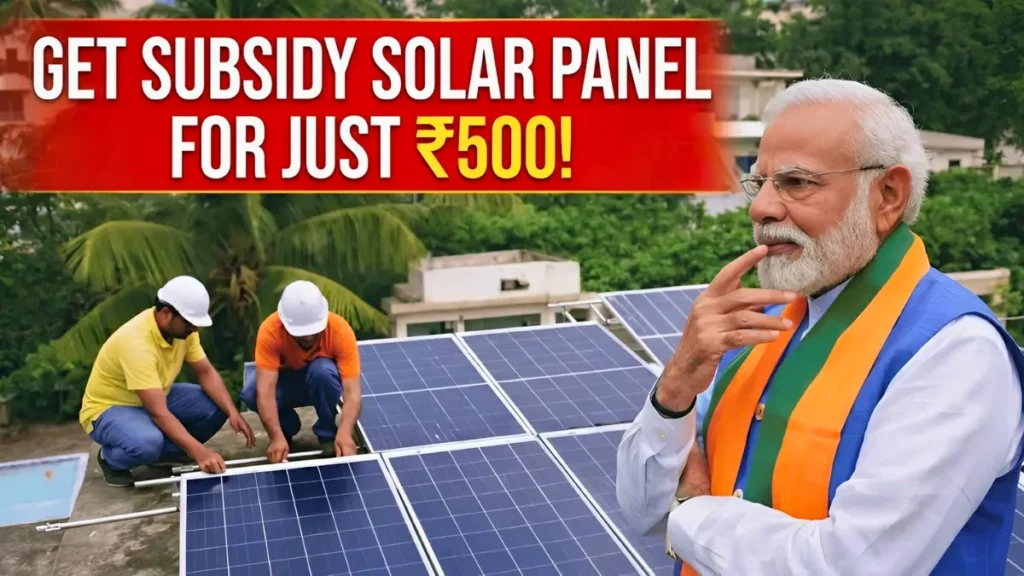
Affordable Solar Energy 2026: The year 2026 is shaping up to be a landmark moment for India’s renewable energy journey. With the launch of the PM Surya Ghar Scheme, households can now install solar panels at a subsidized cost of just ₹500. This initiative is not only about saving money—it’s about transforming how families consume energy, reducing dependence on traditional electricity, and paving the way for a greener future.
Solar panels within reach
The biggest attraction of the scheme is affordability. Solar panels, once considered expensive, are now available at a token price of ₹500. This subsidy makes clean energy accessible to millions of households. By lowering the entry barrier, the government ensures that solar adoption is no longer limited to urban elites but reaches middle-class and rural families who can benefit the most.
Benefits for everyday households
Electricity bills often weigh heavily on monthly budgets. With solar panels installed under this scheme, families can generate their own electricity and cut down costs significantly. Over time, the savings will far exceed the initial investment. The scheme also allows households to sell surplus energy back to the grid, creating an additional income stream while promoting energy efficiency.
Rural electrification boost
In villages where electricity supply is unreliable, solar panels can be a lifeline. The PM Surya Ghar Scheme ensures that rural households gain access to consistent power at minimal cost. This will improve living standards, support small businesses, and reduce reliance on diesel generators. By lighting up rural homes, the scheme contributes to balanced development across the country.
Green energy adoption
India has ambitious climate goals, and this scheme is a major step toward achieving them. Affordable solar panels encourage widespread adoption of renewable energy, reducing carbon emissions and dependence on fossil fuels. Citizens are empowered to contribute to a cleaner environment, making sustainability a household practice rather than a distant policy objective.
Employment opportunities rise
The rollout of solar panels at scale will create thousands of jobs. From manufacturing to installation and maintenance, the demand for skilled workers will grow rapidly. Local technicians, electricians, and entrepreneurs will benefit from new opportunities, strengthening both the economy and the renewable energy ecosystem.
Long term financial savings
Solar panels typically last for 20–25 years, offering decades of reduced electricity bills. With rising energy costs, this scheme provides a stable and cost-effective solution. Families investing in solar today will enjoy long-term financial security, making it one of the smartest household decisions of 2026.
Energy independence for families
One of the most empowering aspects of solar adoption is independence. Families no longer need to rely solely on grid supply, which can be unpredictable and expensive. By generating their own electricity, households gain control over their energy usage and costs, ensuring stability even during peak demand periods.
Technical specifications
To help households understand what they’re getting, here are some key specifications of the subsidized solar panels:
| Specification | Details |
|---|---|
| Panel Capacity | 1–3 kW options available |
| Lifespan | 20–25 years |
| Efficiency | 15–20% average |
| Warranty | 5–10 years depending on model |
| Maintenance | Minimal, annual cleaning recommended |
These specifications ensure that families receive reliable, durable, and efficient panels that can meet daily household needs.
Key highlights of the scheme
- Subsidized cost of ₹500 per panel
- Available for both urban and rural households
- Option to sell surplus energy to the grid
- Long-term savings on electricity bills
- Contribution to India’s renewable energy targets
- Employment generation across sectors
Conclusion: Affordable Solar Energy 2026
The PM Surya Ghar Scheme 2026 is more than just a subsidy—it’s a vision for a sustainable and affordable energy future. By offering solar panels at ₹500, the government is democratizing access to renewable energy, empowering households, and driving India closer to its climate goals. With benefits ranging from reduced bills to rural electrification and job creation, this scheme could be the turning point in India’s energy journey. For families across the nation, the sun has never been more affordable.